

Being together, sensing together: on FORUM at the Biennale de la danse de Lyon 2025 ①
In 2025, the Biennale de la danse de Lyon launched FORUM—an attempt to ask how a major European festival might listen to practices that have often remained outside Eurocentric systems of circulation, and how it might build a space to think with them rather than simply present them.
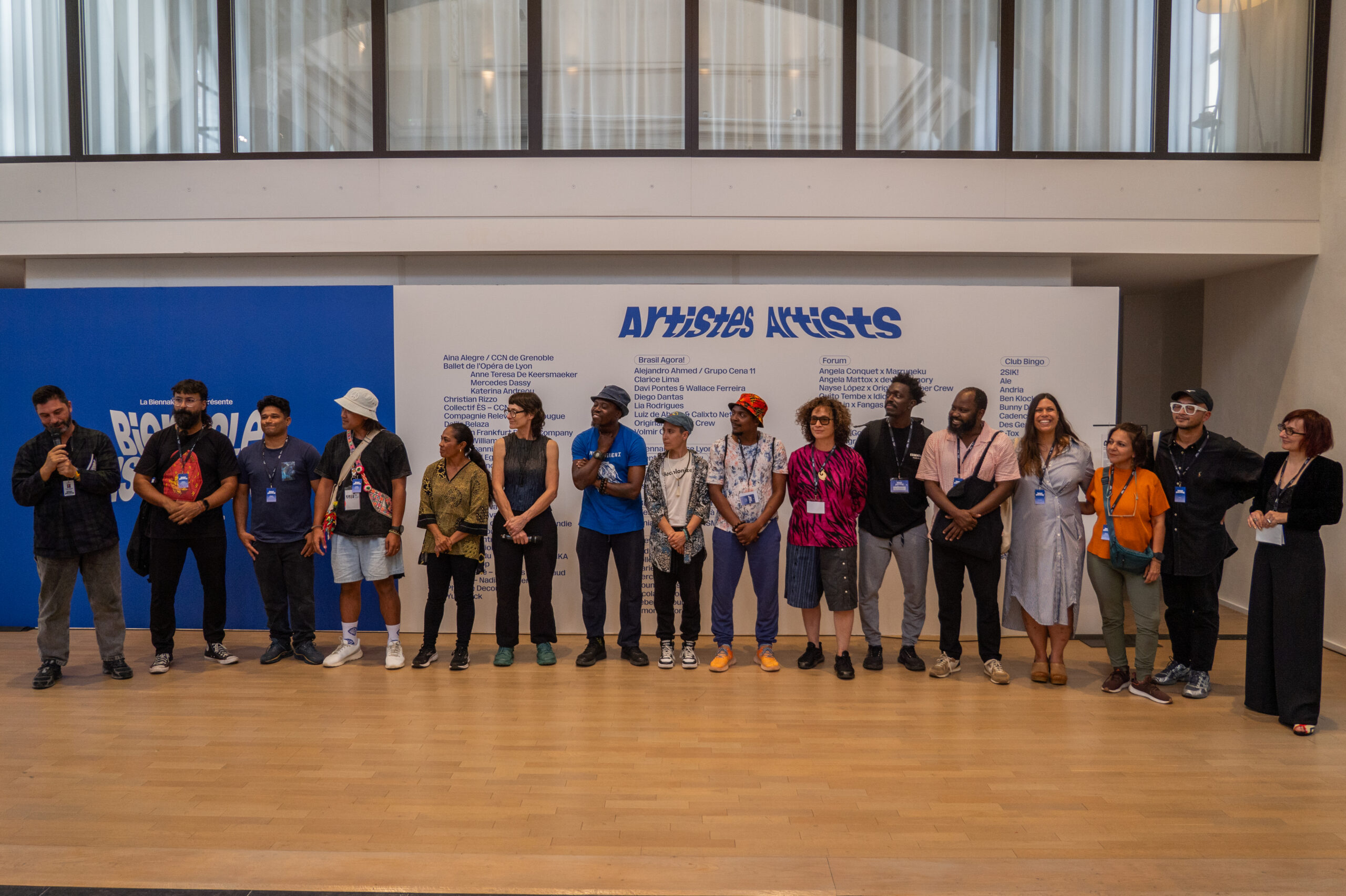
Curators and artists invited from five regions outside Europe—Australia, Brazil, Mozambique, Taiwan, and the United States—chose not to “show finished works,” but to share practices rooted in specific lands, histories, and bodies, weaving a multi-layered space for dialogue over five days.
Through a conversation with Angela Conquet—one of FORUM’s co-curators and its coordinator—this series revisits what this experimental project set out to question, and what kinds of possibilities it opened. Across three instalments, we share her reflections, which quietly yet unmistakably unsettle not only received ideas of what a festival or curating might be, but also the very framework through which we have come to name “contemporary dance”.
At the starting point of FORUM lay a deliberate shift in posture: rather than “presenting” finished works, it sought to “share” something that precedes them. In Part ①, we trace the questions from which that choice emerged.
Interview, Writing & Translation: Yurika Kuremiya
■ Internationality in festivals: between the local and the universal
The Biennale de la danse de Lyon is one of Europe’s major international dance festivals. Founded in 1984 in Lyon, in eastern France, it has long served as a key platform for dance in the European festival landscape.
In 2022, Portuguese curator and programmer Tiago Guedes became its third artistic director, following Guy Darmet and Dominique Hervieu. Under his direction, the Biennale has positioned itself as “a place for exploration and discovery,” presenting programmes that bring together a wide range of aesthetics, formats, regions, and generations.
— Could you tell me how FORUM came into being?
FORUM began with an idea from the Biennale’s current artistic director, Tiago Guedes. He had already imagined it as a key project that would embody his artistic vision when he applied for the position. Among the five curators who ultimately became involved, Nayse Lopez and I were invited to exchange thoughts from that stage.
Once he was officially in post, he positioned it as a flagship project. I think he wanted to rethink the Biennale’s “internationalism” in another way. The Biennale de la danse de Lyon is a historic festival in France and it has always claimed an international scope—but especially in Europe, what does “international” actually mean? It is easy to treat “anything non-French” as “international”, but is that really the point?
What I think Tiago was trying to explore through this project was whether the economics of performing arts, and the relationships that organise how we work with artists, could exist in forms other than those Europe has cultivated.
For us as guest curators, it really was a carte blanche. There was a strong initial decision—to invite curators from outside Europe—and then each of us was extended the same invitation: “Please choose artists who are essential and indispensable for the region you work within.” So our starting questions became: which artists might bring something specific to non-European contexts? In the frame of a biennale like this, what might matter—and how could it be realised well?
What was striking is that although we hadn’t coordinated in advance, the artists we chose ended up sharing remarkable common ground. Their approaches were deeply rooted in the places where they come from, and in current issues their regions are exposed to. That includes the urgency of climate crisis, but also questions such as: what does it mean to live in places with colonial realities? what does it mean to live on land that has been taken, or is still contested?
And it was not only the content of their program, but also the forms of their making: some artists work in ways that are fundamentally different from established European production models. Perhaps this is because the infrastructures that sustain their work are different from those in the so-called “Global North”; perhaps because dance itself carries another function there—as ritual, or as techniques for survival. In some of those contexts, dance exists as part of everyday life, rather than as something may be considered as “career” or “abstract art discourse.”
As we kept imagining the FORUM and what it would have to offer, we started to think about what “exchange” really means. It too easily suggests a transactional relation—I give you this, you give me that. What we wanted was closer to sharing which didn’t imply an obligation of returning something back: it became about sharing the practices themselves, and opening a space where audiences could encounter them and discover.
© Elyes Esserhane
■ Thinking the world through the body: dance beyond “works”
FORUM included no performances for the stage. Instead, the programme unfolded across movement invitations, talks, installations, and other formats—organised around four axes: “dialogue,” “provocation,” “participatory practices,” and “artistic proposals.”
— What moved me most was how the centre of gravity was not the “work,” but embodied practice itself.
Yes. In Europe, there is a long habit of framing a work as spectacle—this is the performance; come and watch—and of seeing that moment as the primary encounter with audiences. But at FORUM, what we were really trying to foreground was the idea that an artist’s practice does not have to take the form of a work or a staged performance. Of course, all the artists involved could have presented works. But our interest was in what comes before the work—what informs a work in the first place. And that is inseparable from the places where they come from.
The English word “place” is important here. Not simply as geographic location, but as land that exists materially—as culture, as grounding, as a force that guides ways of living. Dance is only one form in which all of those aspects of place appear.
In Europe it is possible to say, “I dance, but it has nothing to do with where I come from.” That can align with a cosmopolitan vision of nomadic identities. But it can also slide into something perhaps slightly colonial—excluding other histories, other ways of telling.
The five artists at FORUM spoke of the relationship between body and land in a way that is very situated. For us it mattered to bring those questions forward through both bodies and words. That’s why we included many participatory, somatic experiences: we wanted to show that it is possible for anyone to think the world through the body.
This is not to deny the beauty of conceptual choreography that Europe has developed—its abstractions, its handling of space and time. But here we were trying to imagine another approach: what bodies do in everyday life, what they say, and what kinds of worlds they carry.
So it wasn’t only “choreography.” Dance can be at the same time music and storytelling and ancestral knowledge all in one. For instance, the practices of Indigenous artists are inseparable from their communities, from histories of colonisation, and from the ongoing exploitation and destruction of land. The fact that cultures that have existed on those lands for thousands of years have not been adequately recognised also changes the very question of “what dance is.”
In Europe, the way we tend to understand dance is very eurocentric. In many other cultural contexts, however, music, dance, storytelling, community—all of these elements exist together as one. That is what we wanted to bring into FORUM, and above all, to construct it as a series of invitations.
▶︎ 【Continues in Part ②】
Articles in this series:
Being together, sensing together: on FORUM at the Biennale de la danse de Lyon 2025
Part ①
– Internationality in festivals: between the local and the universal
– Thinking the world through the body: dance beyond “works”
Part ②
– Curating relationships: between artists, and with audiences
– Language as a mirror of other thought, imagination, and bodily systems
– An opening where “sensing together” emerged
Part ③
– Hospitalities: generosity, and the tension it contains
– “What are we calling contemporary dance?”
– Continuing by drawing a spiral: power and responsibility in curation
▶︎ 日本語訳はこちらから:
共に在ること、共に感じること —— リヨン・ダンス・ビエンナーレ2025「FORUM」をめぐって
 ©︎ Mathilda Parsons
Angela Conquet アンジェラ・コンケ
Angela Conquet アンジェラ・コンケ
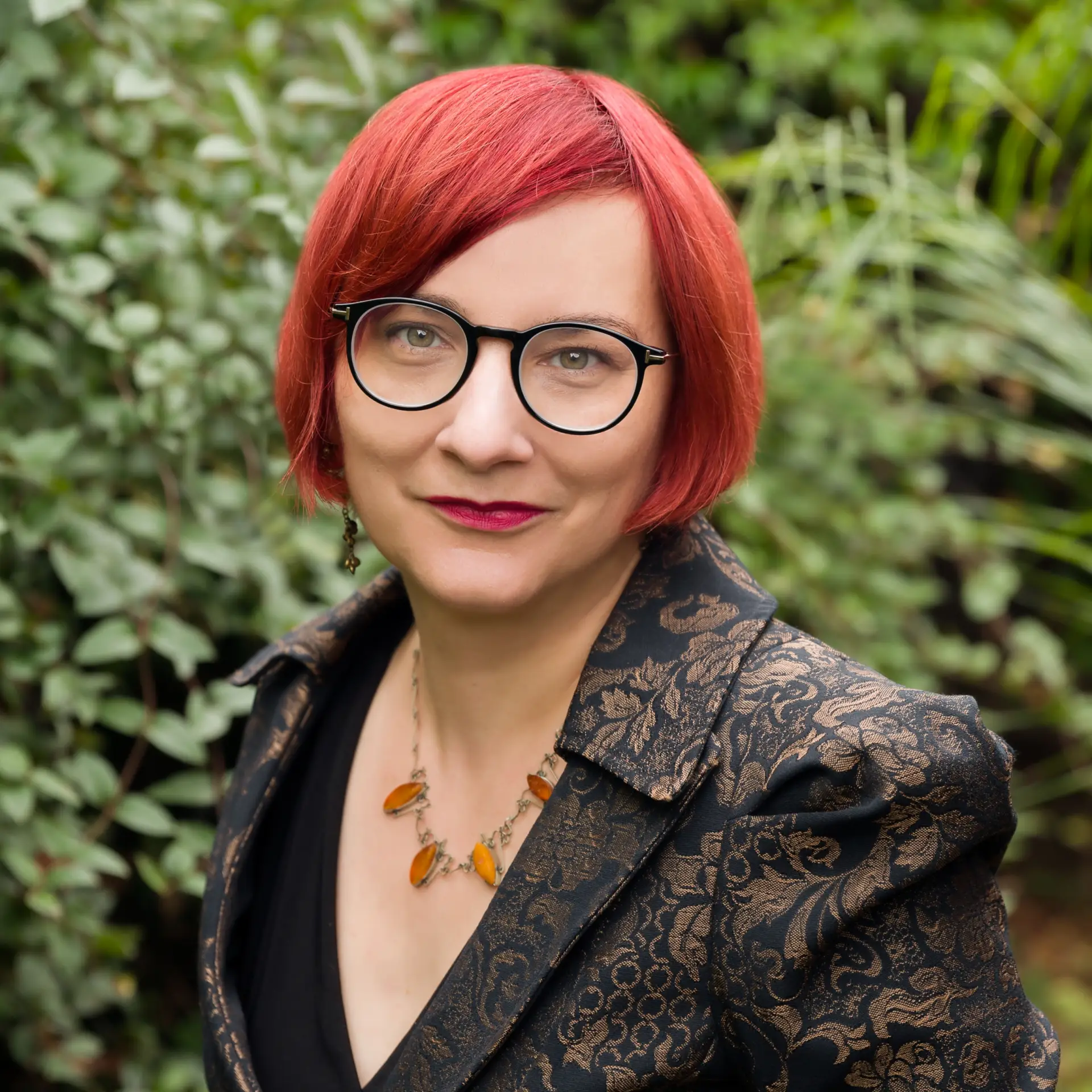
Angela Conquet is an independent dance curator, researcher, writer and translator, working between Europe and Australia. She was Artistic Director of Dancehouse in Melbourne from 2011 to 2020 and of the Keir Choreographic Award and co-director of Dance Massive Festival. More recently, she was the Guest Curator of Dance in Vancouver Festival in 2021, a member of the Asia Network for Dance AND+, and a fellow of the Saison Foundation. Before relocating to Australia in 2011, she was leading the dance artist in residence programs at Mains d’oeuvres in Paris. She has just finalised her doctoral thesis at the University of Melbourne/ UGA Grenoble – with a focus on dance-specific curatorial practices – where she also lectures in Arts Management. She is a co-curator and the coordinator of this edition of FORUM at the Biennale de la danse de Lyon 2025.
ヨーロッパとオーストラリアを拠点に活動する、インディペンデント・ダンス・キュレーター、リサーチャー、ライター、翻訳者。2011年から2020年までメルボルンの〈Dancehouse〉の芸術監督を務めるとともに、〈Keir Choreographic Award〉の芸術監督、〈Dance Massive Festival〉の共同ディレクターを歴任した。近年では、2021年に〈Dance in Vancouver Festival〉のゲスト・キュレーターを務めたほか、〈Asia Network for Dance AND+〉のメンバー、セゾン文化財団ヴィジティング・フェローとしても活動している。2011年にオーストラリアへ拠点を移す以前は、パリの〈Mains d’œuvres〉にてダンス分野のアーティスト・イン・レジデンス・プログラムを主導した。現在は、ダンスに特化したキュラトリアル・プラクティスをテーマに、メルボルン大学/グルノーブル・アルプ大学(UGA)にて博士論文を提出し、同時にアーツ・マネジメント分野で教鞭を執っている。2025年リヨン・ダンス・ビエンナーレにおける「FORUM」では、共同キュレーターおよびコーディネーターを務めた。
記事一覧